Open mobile app

Anne-MarieMon–Fri: 11:00 AM — 8:00 PM
Hello! Need a hand?
No worries — just let me know what you’re looking for and I’ll be happy to help. 😊
Domaine Reine Juliette sits along the southern side of the modern A9, which historically was the Via Domitia which connected Italy to Spain. The road played an important part in expanding viticulture in the Languedoc and putting Picpoul de Pinet wines on the map. The Via Domitia was also known as via Reine Juliette after a queen of the same name who once travelled along it.
Since the estate borders the road, it was named after this queen. This relationship to the region’s deep history is appropriate as Guillaume Alliès is one of the guiding forces moving Picpoul into future; a future of higher quality, lower yields and more conscientious vineyard work.
Guillaume and his sister Marion inherited the estate from their parents in 1985, and they are now joined by his son working the land. Together they are the 6th and 7th generations of Alliès making wine at Reine Juliette.
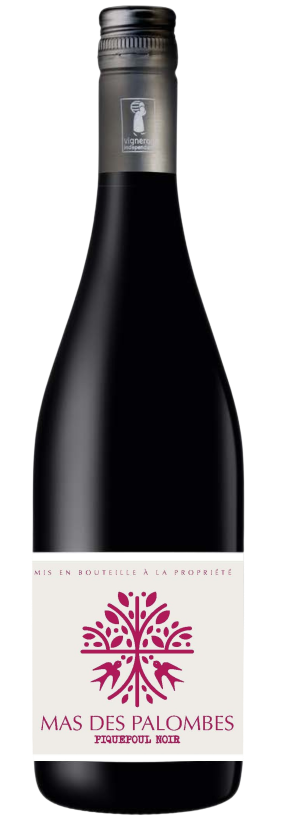
At Mas des Palombes, the vines stretch out like a sea of green, caressed by the golden rays of the Mediterranean sun. Each day begins with the murmur of leaves in the sea breeze, and each evening is adorned with the warm hues of sunset. In this wine-growing paradise, planted with umbrella pines and garrigue, each berry, nourished by an exceptional terroir, reveals a symphony of unique flavours. In the glass, each sip evokes the history of this generous land and the dazzling beauty of its wines, born in the heart of this sun-drenched terroir, just a stone’s throw from the sparkling Mediterranean.
Tradition – through the heritage of several generations of winegrowers who have passed on the essential know-how towards a constant search for quality in order to strive for perfection.
Density of vines is 4000 plants/ha, Single size guyot, yield 60 hl/ha. Micro climate, tempered by sea breezes and fogs. Red clay and limestone gravel.
Picpoul Noir (or Piquepoul Noir) is a rare, black-skinned variant of green-skinned Picpoul Blanc, the variety best known in its Picpoul de Pinet guise. Only a tiny number of Picpoul Noir vines remain, and almost all of them are located in southern France, in the southern end of the Rhone Valley and in patches of eastern Languedoc. A handful of the vines are also found growing in Spain, where the variety is known as Picapoll Negro.
The variety is almost never vinified on its own (although a few Picpoul Noir rosés are made in the Languedoc); it is nearly always used in blends. The world’s few varietal Picpoul Noirs are light in colour but highly perfumed and have a good acid structure and high alcohol.
All the fruit is destemmed before being gently pressed pneumatically and fermented and aged at precisely controlled temperatures to preserve absolute freshness.
This a wonderful expression of the varietal – delicious, smooth and fruity. Excellent value for money and so much enjoyment in the glass! Lovely fruitiness and a good body but not too heavy so a very good mid-weeker! Would also work slightly chilled!
Charcuterie board, parma ham & melon, tapas and cheese platters.
Up to 2 years with careful cellaring.
Hello! Need a hand?
No worries — just let me know what you’re looking for and I’ll be happy to help. 😊